
Most products marketed as a topical numbing spray in dentistry rely on drugs such as benzocaine or lidocaine to produce anesthesia. The delivery format uses a propellant that briefly cools the mucosa, but the temperature drop carries little clinical weight in these formulations. Understanding why matters when you consider vasoconstriction as part of your injection protocol.
Cooling-based anesthetic devices work through a different mechanism, and the vascular response follows a different timeline. DentalJect anesthetizes the mucosa through rapid cooling itself, producing a vasoconstrictive response tied directly to the anesthetic action. Below, you will see how the two categories differ and where meaningful vasoconstriction actually occurs.
Do Topical Numbing Spray Products Cause Vasoconstriction?
Most drug-based topical numbing spray products produce brief cooling from propellant evaporation, but the effect fades during the required wait for drug diffusion. Any vasoconstrictive contribution is not clinically meaningful because tissue temperature returns to baseline before the injection begins. Cooling-based anesthetic devices differ because the cold itself acts as the anesthetic, keeping the vascular response active during the injection window.
Why Drug-Based Topical Numbing Spray Formulations Miss the Vascular Window
A drug-based topical numbing spray delivers benzocaine or lidocaine in an aerosol format that requires diffusion through the mucosal barrier. Onset ranges from one to three minutes depending on concentration and site conditions. During that wait, any brief temperature drop from the propellant reverses as tissue rewarms toward baseline.
The mismatch matters because vasoconstriction depends on sustained cooling during the clinical window when it would offer value. When the injection begins, the tissue temperature has already normalized in most drug-based formulations. As a result, any vasoconstrictive effect from propellant evaporation contributes little to bleeding control or field clarity.
According to a physiologic review published in Cleveland Clinic Journal of Medicine, cold produces vasoconstriction that decreases swelling and inflammation only while the tissue remains cool. In practice, a drug-based topical numbing spray does not maintain cold long enough for the vascular response to reach the injection moment. Meanwhile, the pharmacologic anesthetic action carries the clinical load on its own.
How Cooling-Based Anesthesia Produces a Meaningful Vascular Response
Cooling-based anesthetic devices operate on a different principle by using rapid mucosal cooling as the anesthetic mechanism itself. Onset occurs within one to two seconds, and the injection follows immediately during the cooled window. The vasoconstrictive response occurs at the same moment, tied directly to the anesthetic action.
The Physiology Behind the Vascular Response
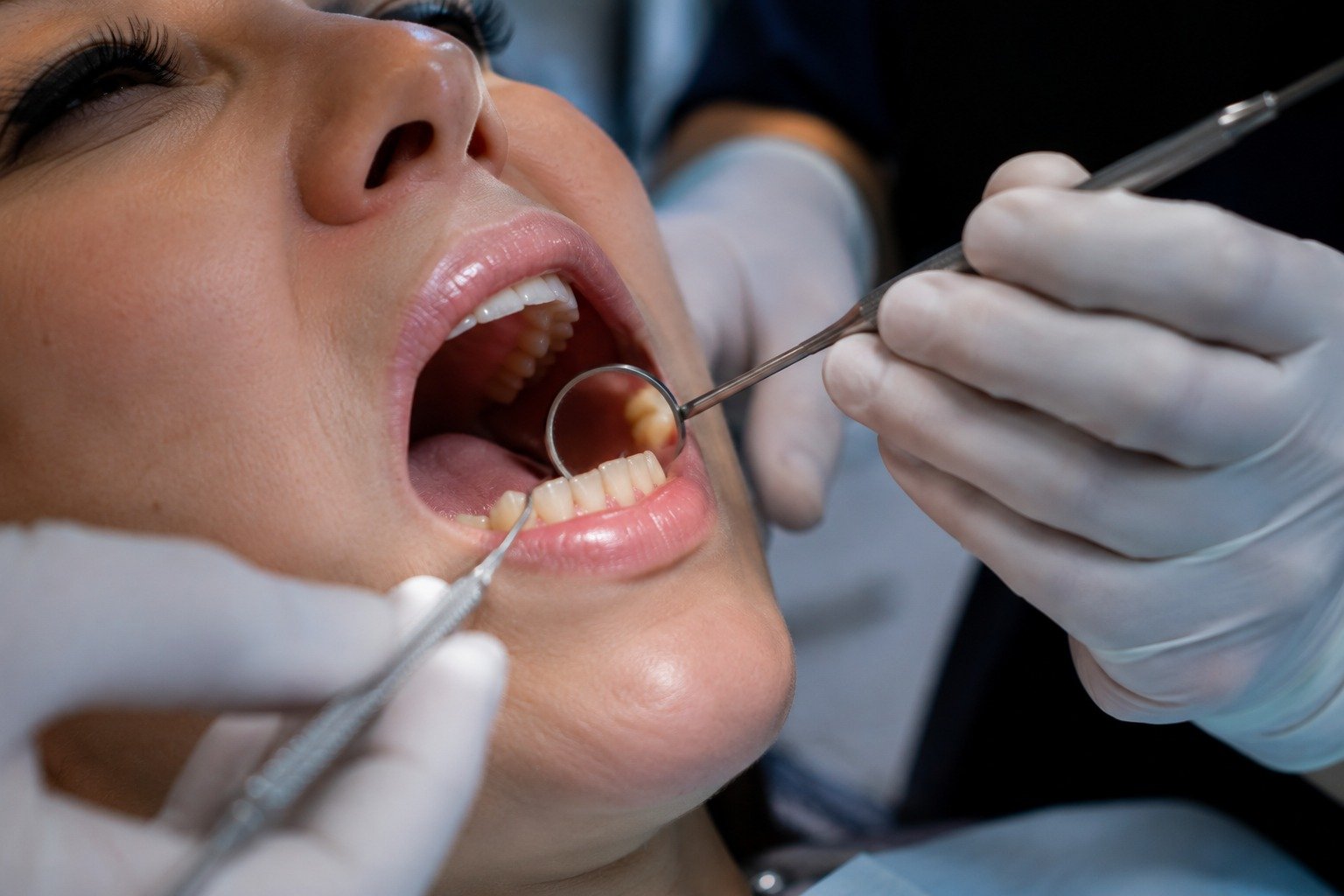
Rapid mucosal cooling triggers several overlapping physiologic effects that support the pre-injection window.
Cold activates cutaneous receptors that stimulate smooth muscle contraction in blood vessel walls.
Reduced release of vasodilator mediators such as histamine and prostaglandins limits local vasodilation.
Localized blood flow reduction supports cleaner tissue conditions at the injection point.
Brief application matches the injection window without extending into prolonged ischemia.
According to a systemic review of cryotherapy physiology, cold directly stimulates smooth muscles of blood vessel walls to contract while reducing vasodilator mediators. The dual pathway produces a vascular response that operates alongside the anesthetic effect.
Unlike a drug-based topical numbing spray, cooling-based anesthesia keeps the tissue cool during the exact clinical moment when vasoconstriction offers value. Review the how it works page to see how the mechanism supports both anesthesia and the related vascular response.
Clinical Implications for Your Injection Protocol
The distinction between drug-based and cooling-based approaches shapes how you evaluate any topical numbing spray for its vascular effects. Drug-based formulations rely on pharmacology to produce anesthesia and offer little meaningful vasoconstriction at the injection moment. Cooling-based anesthesia pairs both effects in the same window, though anesthesia remains the primary clinical purpose.
DentalJect anesthetizes the treatment site through rapid mucosal cooling within one to two seconds. The vasoconstrictive response follows as a related physiologic effect that supports cleaner surface conditions at the point of needle entry. As a result, palatal and buccal injections benefit from reduced surface bleeding alongside the primary anesthetic action.
The vascular effect stays localized to the sprayed area and resolves shortly after tissue rewarming begins. Meanwhile, drug-free cooling avoids the pharmacologic vasoconstrictors added to some injectable anesthetics for hemostasis purposes. Review the benefits page for a full overview of the mechanism in daily practice.
Site-Specific Value During Dental Procedures

The vascular response holds different clinical weight depending on the injection site and procedure type. Palatal injections benefit because dense surface vasculature can produce minor bleeding that obscures the field. Cleaner tissue conditions support smoother needle placement in an area where visibility already challenges the clinician.
Posterior mandibular blocks and buccal infiltrations also gain from reduced surface bleeding at the point of entry. In addition, the anesthetic effect at the mucosa remains the primary reason to apply cooling before the needle enters. A cooling-based topical numbing spray delivers both effects in the same window, unlike drug-based products that separate them.
Explore our post on palatal injections and patient distress for related site-specific technique guidance. In addition, our post on numbing spray as a prescription device covers regulatory context for these device categories.
Choose the Right Topical Numbing Spray Mechanism for Your Practice
The vasoconstrictive properties of any topical numbing spray depend entirely on whether cooling persists into the injection window. Drug-based formulations rely on pharmacology and offer little meaningful vascular effect at the clinical moment. Cooling-based anesthesia pairs both mechanisms in the same window and supports cleaner surface conditions during pre-injection care.
DentalJect brings targeted mucosal cooling into your operatory with a design built for the pre-injection stage. Reach out through our contact page to discuss how the mechanism fits your current injection protocols.
Ready to start the No-Wait Injection Protocol?
Add DentalJect to your practice with the Intro Bundle.
Get the Intro Bundle